
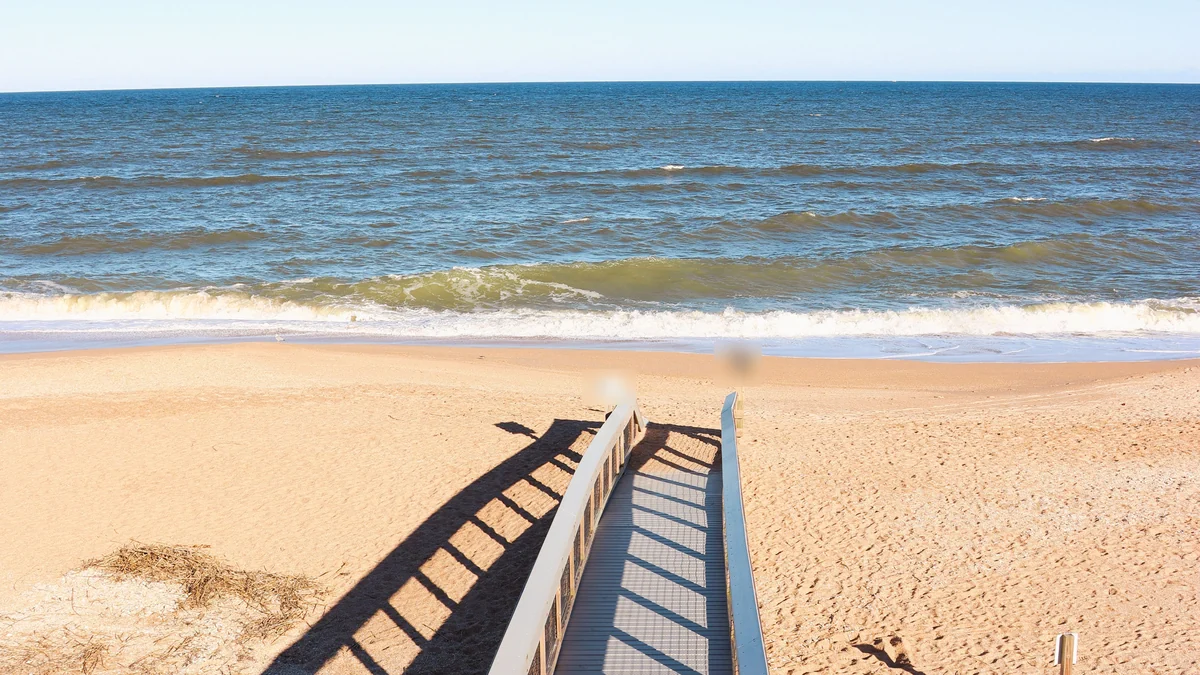
At Atlantic Beach, Neptune Beach and Jacksonville Beach, golf carts and low-speed vehicles (LSVs) are a common sight near the ocean. The rules differ from one city to the next, and so does the insurance, depending on whether you drive a plain golf cart or a street-legal LSV.
We work with homeowners in the Jacksonville area by phone, email and video. A licensed member of our team may be able to compare options from the insurance companies we represent. For Florida’s statewide rules, see our motorcycle, ATV and golf cart insurance page.
Golf cart or LSV? Why it matters at the beach
- Golf cart: Florida law defines it as a vehicle built for golf course use that is “not capable of exceeding speeds of 20 miles per hour.” Under state law, golf carts used under the golf cart rules don’t need registration or a plate.
- LSV: a four-wheeled vehicle with a top speed over 20 mph and no more than 25 mph, built to the federal LSV safety standard.
A golf cart converted to an LSV needs an inspection and VIN assignment through the state’s highway safety agency (FLHSMV), then a title and registration, and FLHSMV notes the title year shows when it was registered, not when it was built. That’s worth knowing if you’re buying a used beach cart. A plated LSV can generally go where a plain golf cart can’t, and the rules and the insurance follow the vehicle type.
Florida’s baseline rules
Golf carts: a golf cart may use a public road only where the city or county has designated it and posted signs, and it may cross a state highway only at a crossing the Florida Department of Transportation has reviewed and approved. Carts run from sunrise to sunset unless the local government allows night use and the cart has headlights, brake lights, turn signals and a windshield. They need efficient brakes, reliable steering, safe tires, a rearview mirror and red reflectors on the front and rear. Since October 1, 2023, a golf cart driver under 18 on a public road needs a valid learner’s license or driver license, and a driver 18 or older needs valid government-issued photo ID. Local governments can set stricter rules, but the statute says a stricter local rule “must apply only to an unlicensed driver.”
LSVs: an LSV may use roads posted at 35 mph or less and may cross faster roads at intersections. It needs headlamps, stop lamps, turn signals, taillamps, reflectors, a parking brake, mirrors, a windshield, seat belts and a VIN, and it must be titled, registered and insured. FLHSMV says proof of at least $10,000 of personal injury protection (PIP) and $10,000 of property damage liability (PDL) is needed to title and register one. The driver must have a valid driver license, and a city or county can prohibit LSVs on a road it controls for safety reasons.
City by city
Rules change, so before you drive a cart or LSV at the beach, check the city’s current code and the signs on the street.
Neptune Beach
Neptune Beach adopted a golf cart ordinance, Ordinance 2020-17, on January 19, 2021. Under it, city roads are designated for golf carts, LSVs and utility vehicles unless a road is later made off-limits, while sidewalks are not. Travel along 3rd Street (A1A) and other state or federal highways isn’t allowed, though crossing at a 90-degree angle is.
The city’s ordinance says golf carts, LSVs and utility vehicles must be registered with FLHSMV and plated, drivers must be over 16 with a valid driver license, and proof of financial responsibility must be on the vehicle or with the driver. State law now says a stricter local golf cart rule must apply only to unlicensed drivers, so check with the city for how it applies these rules. The ordinance also bars use from 30 minutes after sunset to 30 minutes before sunrise unless the vehicle has full lighting and four amber turn signals visible from 500 feet, and it requires a left side mirror and windshield, a slow-moving-vehicle emblem on vehicles that go 25 mph or less, factory seating only, and no children under 3.
Atlantic Beach
Street-legal LSVs may use Atlantic Beach roads posted at 35 mph or less under state law, and a city ordinance adopted March 24, 2025 (Ordinance 75-25-29) says LSVs “must be properly registered and may only be operated on the roadways within the city.” Atlantic Beach hasn’t, as far as we can tell, designated streets for plain golf carts. Check with the city (Atlantic Beach Police, 904-247-5859) before driving one on a public street.
Jacksonville Beach
LSVs may use Jacksonville Beach roads posted at 35 mph or less, and the city has designated oceanfront parking for licensed golf carts and LSVs. We didn’t find a city ordinance designating streets for plain golf carts, so check with the city before driving one on a public street.
Mayport and San Pablo (City of Jacksonville)
These areas are in the consolidated City of Jacksonville, so its Ordinance Code Chapter 804, Part 15 applies. Golf carts may use only a designated road or golf cart path marked with signs or pavement markings (or where that use predates the 2018 code), and the city can designate a road only if it is posted at 30 mph or less. On golf cart paths, the limit is 15 mph and carts must yield to pedestrians and bicycles, while LSVs aren’t allowed on sidewalks or golf cart paths. LSV drivers need a valid driver license, and the vehicle must be registered, insured and titled. The code provides a written warning first, then a $100 civil fine plus $15 court costs.
Look for golf cart signs; unless a street is designated, plain carts aren’t allowed. LSVs follow the 35 mph rule.
Does my home policy cover my golf cart?
It depends on your policy’s wording, and there’s no beach-wide rule. Many home policies limit golf cart coverage to use on your own property or a golf course, or have other limits once you’re on a public road, so read the motor vehicle exclusion and its exceptions. Some home insurers offer a golf cart endorsement, which may have its own limits, conditions and territory rules. Depending on your situation and your home policy’s wording, for most owners we recommend a separate golf cart policy. It’s written for the cart and can include liability, guest passenger, medical payments, uninsured/underinsured motorist, collision, comprehensive and accessories coverage.
Street-legal LSVs need auto-type coverage, with PIP and PDL on an auto policy that lists the vehicle, and a home policy isn’t how you meet that requirement. If a cart has been modified or sped up, tell your agent, because whether it is a golf cart or an LSV affects which policy fits.
Beach traffic, drivers and your umbrella
Beach streets mix carts, LSVs, bikes, e-bikes, people on foot and visitors, and an LSV doesn’t have the crash protection of a car. Ask what liability limits your cart or LSV policy has, and whether your personal umbrella requires certain limits on that policy or needs the vehicle listed.
Ask, too, who is a listed or permitted driver. Golf cart drivers under 18 need at least a learner’s license on public roads. LSV drivers need a valid driver license; ask before letting a learner drive one.
Renting a cart or LSV, or offering one to guests
If you rent an LSV at the beach, ask the rental company what insurance it provides and what you’d owe for damage. Ask your agent whether your own auto policy or umbrella extends to a rented LSV, since that varies by policy. If you own a vacation rental and let guests use a cart, tell your agent, because home and dwelling policies can treat rental or business use differently.
Questions to bring to your agent
- Is it a golf cart or an LSV on paper (title, VIN, plate)?
- Where will it be driven: your property, city streets, A1A crossings or a vacation rental?
- Who drives it: teens, guests or renters?
- Does my home policy cover it, and where, and is there an endorsement?
- Would a separate golf cart policy, or an auto policy for an LSV, fit better?
- Are custom parts, lift kits and batteries covered?
If you charge a cart at home, our post on garage battery charging and fire safety has practical tips. Call (352) 371-7977 or request a quote, and see our Jacksonville home insurance page for more on homes in the area. If you also spend time in The Villages, our Villages golf cart guide covers the rules there.
Frequently asked questions
Can I drive a golf cart on the street in Neptune Beach?
Neptune Beach’s ordinance designates city roads for golf carts, but not travel along 3rd Street (A1A) or other state roads, and it has registration, license and equipment rules. Check with the city for how it applies them.
Are golf carts allowed in Atlantic Beach or Jacksonville Beach?
Street-legal LSVs may use roads posted at 35 mph or less, and Atlantic Beach’s code keeps them on the roadways. We didn’t find a street designation for plain golf carts in either city, so check with the city before driving one on a public street.
What about Mayport?
Mayport is in the City of Jacksonville, where plain carts may use only designated, signed roads or paths, and LSVs may use roads posted at 35 mph or less.
Who can drive a golf cart on a public road?
Under state law since October 1, 2023, a driver under 18 needs a valid learner’s license or driver license, and a driver 18 or older needs valid government-issued photo ID. Neptune Beach’s ordinance has its own license rule, so check with the city.
Does my homeowners policy cover my golf cart at the beach?
It depends on the policy’s wording. Some insurers offer a golf cart endorsement. Depending on your situation and policy wording, for most owners we recommend a separate golf cart policy.
What insurance does an LSV need?
An LSV must be titled and registered, with at least $10,000 of PIP and $10,000 of PDL, and the driver needs a valid driver license.
Am I covered when I rent an LSV on vacation?
It depends on your policies and the rental agreement, so ask before you drive.
General information, not legal or coverage advice. Coverage depends on the policy issued, its terms and underwriting. Road and path rules are set by Florida law and local governments and can change, so follow posted signs and local rules. Sources checked October 30, 2026. McGriff-Williams Insurance is an independent insurance agency in Gainesville, in business since 1983 and licensed in Florida.
Sources
- Fla. Stat. s. 316.212 (2026), golf carts: https://www.flsenate.gov/Laws/Statutes/2026/316.212
- Fla. Stat. s. 316.2122 (2026), low-speed vehicles: https://www.flsenate.gov/Laws/Statutes/2026/316.2122
- Fla. Stat. s. 320.01 (2026), definitions: https://www.flsenate.gov/Laws/Statutes/2026/320.01
- Fla. Stat. s. 320.105 (2026), golf carts exempt from registration: https://www.flsenate.gov/Laws/Statutes/2026/320.105
- FLHSMV, Low Speed Vehicles: https://www.flhsmv.gov/safety-center/consumer-education/low-speed-vehicles/
- City of Neptune Beach Ordinance 2020-17, golf cart regulations: https://www.nbfl.gov/sites/g/files/vyhlif3516/f/uploads/ord._no._2020-17_golf_carts.pdf
- City of Jacksonville Beach, Golf Cart/Low Speed Vehicle (LSV) Parking: https://www.jacksonvillebeach.org/264/Golf-Cart-Low-Speed-Vehicle-LSV-Parking
- City of Jacksonville Ordinance Code, Chapter 804, Part 15, Golf Carts: https://library.municode.com/fl/jacksonville/ordinances/code_of_ordinances?nodeId=896938
- City of Jacksonville Ordinance 2018-266-E, full text: https://mcclibraryfunctions.azurewebsites.us/api/ordinanceDownload/12174/896938/pdf
- City of Atlantic Beach, Police Department: https://coab.us/m/directory/department?did=70
- City of Atlantic Beach Ordinance 75-25-29, final reading text, s. 21-107(i): https://coab.civicweb.net/document/205079/Ordinanace%20No.%2075-25-29.pdf?handle=93BD604B23A8469CA793846F12E20CB8
- City of Atlantic Beach, Regular City Commission minutes, March 24, 2025 (Ordinance 75-25-29 adopted as amended): https://coab.civicweb.net/document/205568/Regular%20City%20Commission%20-%2024%20Mar%202025.pdf?handle=A15850BD3A64427B9426D98D909360FD