Short answer: Restaurant groups and multi-unit retailers often use one coordinated program that treats every location the same way. It usually includes property and business income, general liability, liquor liability if you serve alcohol, workers’ comp, auto, employment practices and cyber. McGriff-Williams Insurance, an independent agency in Gainesville since 1983, works with growing and established restaurant and retail businesses in Gainesville and throughout North Central and Northeast Florida, from Ocala to Jacksonville and St. Augustine.
One program across every location
When you run more than one location, small differences between policies turn into gaps. We help you keep each location’s property values, payroll and job classifications consistent, and keep a current schedule of locations, so when you open or close a store, we can update every policy that needs it.
Property, equipment breakdown and business income
- Property: your buildings or tenant improvements, equipment, furniture and inventory.
- Equipment breakdown: sudden mechanical or electrical failure of coolers, freezers, ovens, HVAC and point-of-sale equipment. Some policies extend it to a breakdown of the utility’s equipment, but that usually doesn’t apply when a storm or flood caused the outage, and food losses may fall under spoilage instead.
- Spoilage: food lost when refrigeration breaks down or the power goes out. It often has its own limit and deductible, and on some policies food is covered only here. The causes it covers vary by policy.
- Business income and utility interruption: lost income while you’re closed after covered physical damage. Many policies exclude losses from a power or utility failure that starts away from your property unless coverage is added by endorsement, and some include only a small built-in amount. Whether overhead power lines are included, how long the waiting period is and the limits all vary, so check yours. If a hurricane or named storm caused the outage, your storm deductible may apply to the outage claim too.
For a real-world look at spoilage gaps, read The freezer hack: insurance gaps Florida restaurants should know about.
General liability and slip-and-fall claims
Slips and falls are a common source of claims at restaurants and stores. In Florida, when someone slips on a spill or other “transitory foreign substance,” they have to prove the business knew or should have known about it and should have fixed it. “Should have known” can be shown if the spill was there long enough that the business should have noticed it, or if the condition “occurred with regularity and was therefore foreseeable” (section 768.0755, Florida Statutes). Floor-check logs, mats at entrances and fixing recurring leaks help, and the records matter if a claim is filed.
Liquor liability
Florida’s dram shop law is narrow. A business that sells or serves alcohol can be liable for an intoxicated person’s actions only if it willfully and unlawfully served someone under 21, or knowingly served someone habitually addicted to alcohol (section 768.125). Claims still get filed, and standard general liability policies usually exclude liquor liability for businesses that sell or serve alcohol, so liquor liability is its own coverage. Under Florida’s Responsible Vendor Act, a business that provides the required training, policies, signs and records generally can’t have its alcohol license suspended or revoked because a trained employee sold to someone under 21, unless the business knew, should have known or took part. Qualifying also counts toward lighter penalties (sections 561.701–561.706). It protects the license from state action. It isn’t a defense to an injury lawsuit. General information, not legal advice.
Workers’ comp for kitchens and stores
For restaurants, stores and most other businesses outside construction, Florida requires workers’ comp once you have four or more employees, full- or part-time (section 440.02). Kitchens bring burns, cuts and slips; stores bring lifting, ladders and stocking injuries. Part-time and seasonal staff count toward the four while they’re on your payroll, and payroll by job classification drives your premium. See our workers’ compensation page.
Employees driving for the business
Catering runs, deliveries and bank trips in employees’ own cars can come back to your business. Hired and non-owned auto coverage can protect your business when it’s pulled into a claim from that driving. It doesn’t repair the employee’s car. See commercial auto.
Employment practices and wage-and-hour
Florida’s minimum wage rose to $15.00 an hour on September 30, 2026. Tipped employees must be paid at least $11.98 an hour in direct wages, and tips must bring them to at least $15.00 (state minimum wage poster; Article X, section 24, Florida Constitution). Employment practices liability (EPLI) can respond to claims such as discrimination, harassment or wrongful termination. Many EPLI policies exclude wage-and-hour claims. Where some coverage is included, it’s often limited to defense costs up to a separate, lower sublimit, and not the back wages or overtime owed. Read that part of your policy closely. General information, not legal advice.
Card payments and cyber
Card data, online ordering and loyalty programs can make restaurants and retailers targets for data breaches and payment fraud. Cyber insurance can help with breach response, notification and business interruption, depending on the policy. We also offer a cyber risk assessment: a review of your cyber exposures, the questions underwriters ask, and how your insurance lines up with them. It isn’t a technical security audit or certification, or a substitute for your IT provider’s review.
Umbrella
Leases and franchise or vendor agreements often require higher liability limits than your primary policies carry. An umbrella adds a layer above your general liability, liquor liability, auto and employer’s liability, depending on its terms.
Beyond the policy
For our clients, we also offer:
- Lease and vendor contract reviews of the insurance requirements in your real estate leases and vendor contracts. We review the insurance terms, not the contract’s other legal terms.
- Guidance on reading certificates of insurance from your vendors and contractors
- Workers’ comp and GL audit support
- Cyber risk assessment
- Safety and HR resources: an employee safety training platform, OSHA support, access to live HR professionals, an employee handbook builder, job description and HR forms builders, and harassment training
- Driver safety: defensive and distracted driver training, and, for clients, driving record (MVR) monitoring
What drives the cost of restaurant and retail insurance?
- Number, type and size of locations, and the counties they’re in
- Property values and equipment, including kitchen equipment and inventory
- Payroll by job, which drives workers’ comp and some liability pricing
- Alcohol sales, as a share of revenue
- Cooking type and fire protection, including hood and suppression systems and how often your hood and exhaust system are inspected and cleaned
- Claims history
Market context (CIAB Q2 2026 data, published Aug. 18, 2026): Nationally, the Council of Insurance Agents & Brokers reported average second-quarter 2026 renewal changes of −6.3% for commercial property and +5.3% for umbrella. These are U.S. averages across all businesses, not restaurant or Florida figures. The higher state minimum wage can also raise payroll, which is the main rating base for workers’ comp.
We can’t give a price without a few details. Here’s what we need.
How to get a quote
What we’ll need:
- Number of locations and the counties they’re in
- Type of operation (for example full-service, limited-service, retail store)
- Whether you serve alcohol
- Estimated annual revenue and payroll
- Current policy expiration dates
What happens next: A licensed member of our team will review your request and contact you by phone or email.
Why it isn’t instant: We compare options from multiple insurance companies, and coverage isn’t in place until it’s bound.
Request a quote: Request a quote · Call (352) 371-7977 · Monday–Friday, 9 a.m.–5 p.m.
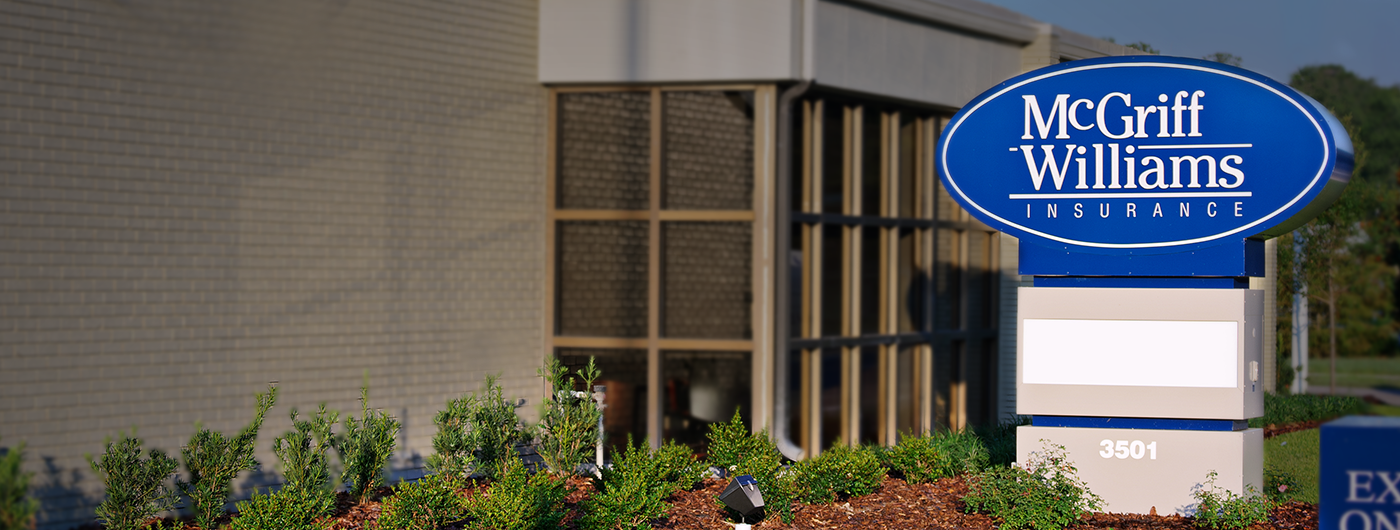
McGriff-Williams Insurance · 3501 W University Ave, Gainesville, FL 32607
Frequently asked questions
Can one policy cover all my locations?
Often, yes. A package policy can list every location on one schedule, with limits for each. Some coverages, like workers’ comp and auto, sit on separate policies, so we line them up to match.
Do I need liquor liability if we only sell beer and wine?
Usually, yes. Standard general liability policies typically exclude liquor liability for businesses that sell or serve alcohol, whatever the type, and landlords and lenders often require liquor liability.
Does my policy cover food spoilage from a power outage?
It depends on the policy. Many policies exclude outages that start away from your property unless coverage is added, and on some policies food is covered only under spoilage coverage, which has its own limit and deductible. Overhead power lines, waiting periods and limits vary too. Call us with questions about how your policy handles outages.
Do seasonal and part-time workers count for workers’ comp?
Yes. For restaurants, stores and most other businesses outside construction, Florida counts full- and part-time employees, including seasonal staff while they’re on your payroll, toward the four-employee threshold.
What does a landlord usually require from a restaurant tenant’s insurance?
It varies by lease, but common requirements include general liability and liquor liability at set limits, often an umbrella, the landlord as an additional insured (sometimes on the liquor liability coverage too), a waiver of subrogation, property coverage for your improvements and equipment, and workers’ comp. Check your lease, and send us the insurance section to compare.
This page is general information, not legal advice. Coverage depends on your policy’s terms. Figures were checked October 19, 2026.
Sources
- Florida Statutes s. 768.0755 (transitory foreign substance), 2026: https://www.flsenate.gov/Laws/Statutes/2026/768.0755
- Florida Statutes s. 768.125 (liability for injury or damage resulting from intoxication), 2026: https://www.flsenate.gov/Laws/Statutes/2026/768.125
- Florida Statutes ss. 561.705 (responsible vendor qualification) and 561.706 (exemption from license suspension or revocation; mitigation), 2026: https://www.flsenate.gov/Laws/Statutes/2026/561.705 ; https://www.flsenate.gov/Laws/Statutes/2026/561.706
- Florida Statutes s. 440.02, 2026: https://www.flsenate.gov/Laws/Statutes/2026/440.02
- FloridaCommerce, “Minimum Wage in Florida” poster, effective Sept 30, 2026 ($15.00; tipped $11.98 plus tips): https://floridajobs.org/docs/business-growth-and-partnerships/for-employers/posters-and-required-notices/2026-minimum-wage/2026-minimum-wage-poster---english16e611e896c44cfaa710ab7c79bd743e.pdf?sfvrsn=2b225d2c_1 ; Florida Constitution, Article X, section 24: https://www.flsenate.gov/Laws/Constitution#A10S24
- Florida Department of Financial Services, Division of Workers’ Compensation, Employer Coverage Requirements: https://www.myfloridacfo.com/division/wc/employee/employer-coverage-requirements
- CIAB, Q2 2026 P&C Market Survey (released Aug. 18, 2026): https://www.ciab.com/resources/q2-2026-pc-market-survey
- CIAB Q2 2026 P&C Market Survey, via Insurance Journal (Aug 20, 2026): https://www.insurancejournal.com/news/national/2026/08/20/882240.htm
- McGriff-Williams blog, freezer hack (published Oct 18, 2026): https://mcgriffwilliams.com/freezer-hack-insurance-gaps-florida/